
CRM and website integration
Connect customer enquiries with an existing lead-management platform.
Reduce information silos by planning secure integration of your core business tools, applications, data and deployment environments.
A thoughtful approach to technology choices, implementation and long-term usability.
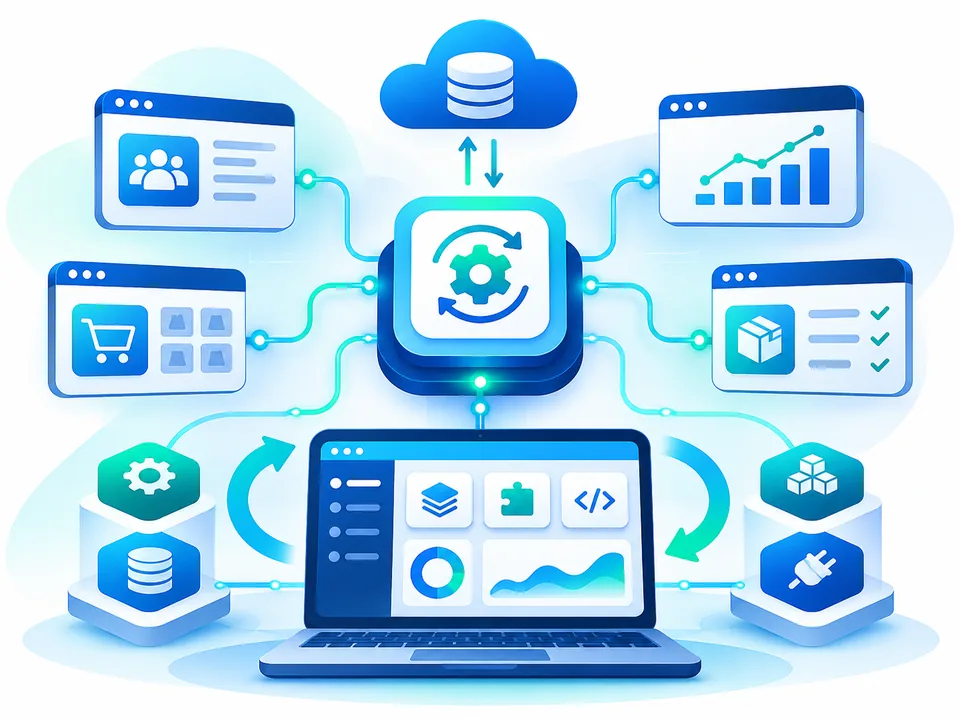
Connect applications, data and infrastructure through reliable APIs and integration-oriented architecture.
These examples describe possible applications, not completed projects or promised results.
Connect customer enquiries with an existing lead-management platform.
Plan an approved data pipeline for management visibility.
Set up environment, access-control and monitoring requirements for a business app.
Understand objectives, systems, workflows, constraints and risks.
Define a realistic roadmap, priorities and success criteria.
Build, configure, integrate and validate the selected approach.
Review performance and support practical improvements.
Integration feasibility depends on API support, database access, vendor policies and security constraints.
Often yes, after defining field mapping, ownership, frequency and error handling.
Hosting and platform charges may apply. They should be estimated separately before implementation.
Practical AI assistants and supervised agents that support teams, handle routine work and connect to existing systems.
Explore service ↗Streamline repetitive tasks, approvals, notifications and data handoffs across connected business tools.
Explore service ↗Search visibility, performance marketing and analytics-led campaigns built around relevant business outcomes.
Explore service ↗Discuss your objectives across AI, analytics, automation, development and digital growth. We'll start by understanding the challenge.